
Garage Floors
A ground, patched and sealed garage floor that shrugs off ice melt, hot tires and oil — and wipes clean with a shop broom.
Learn More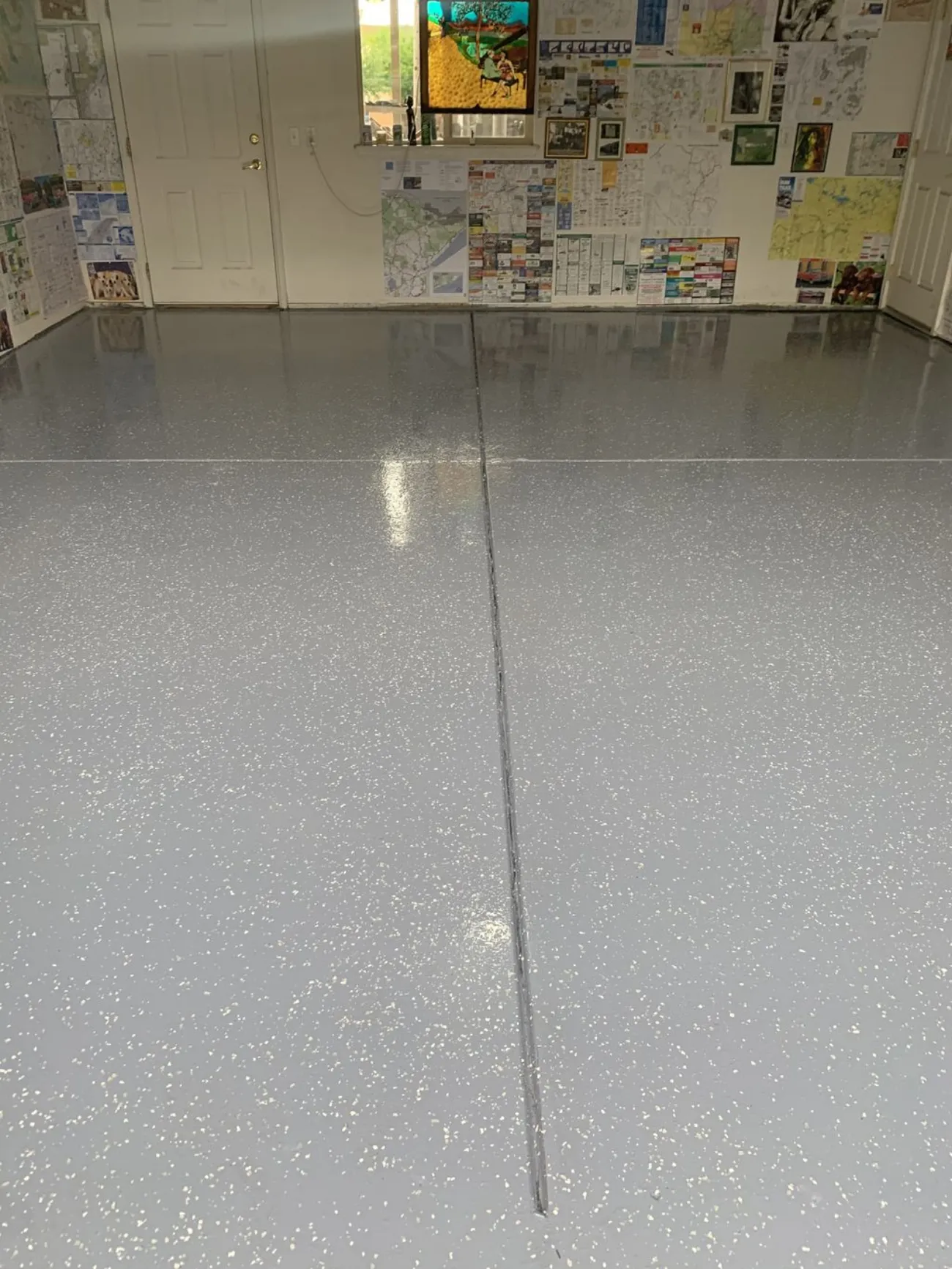
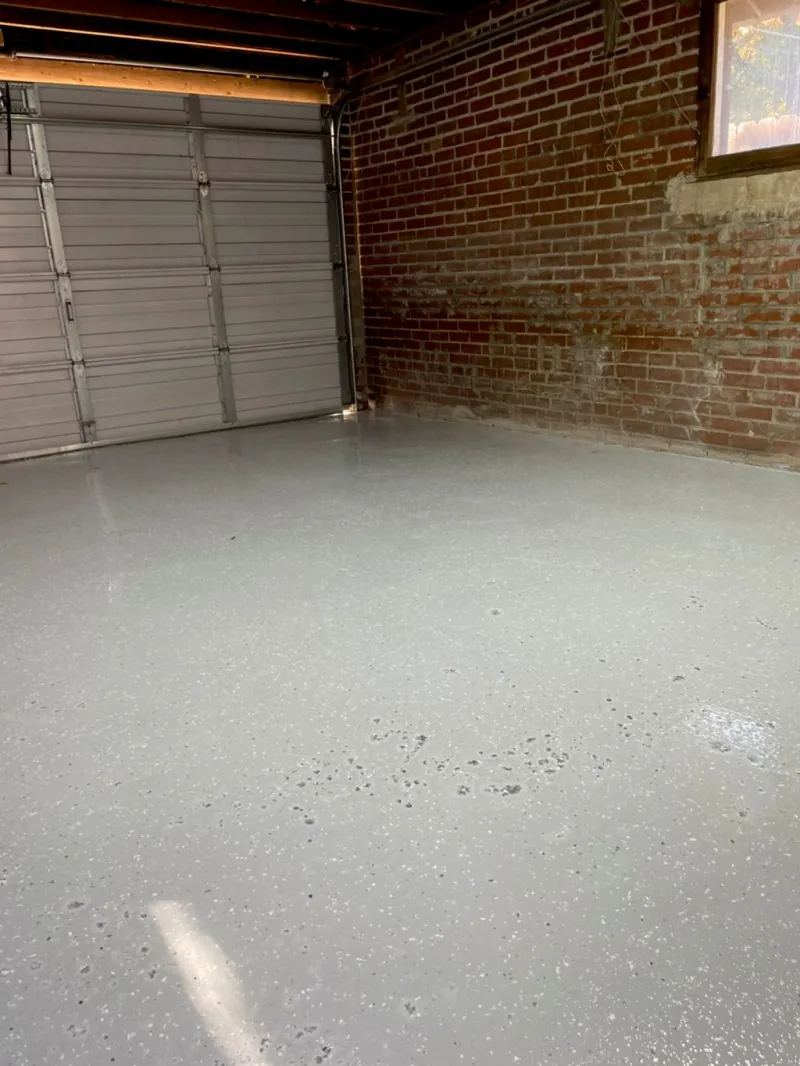
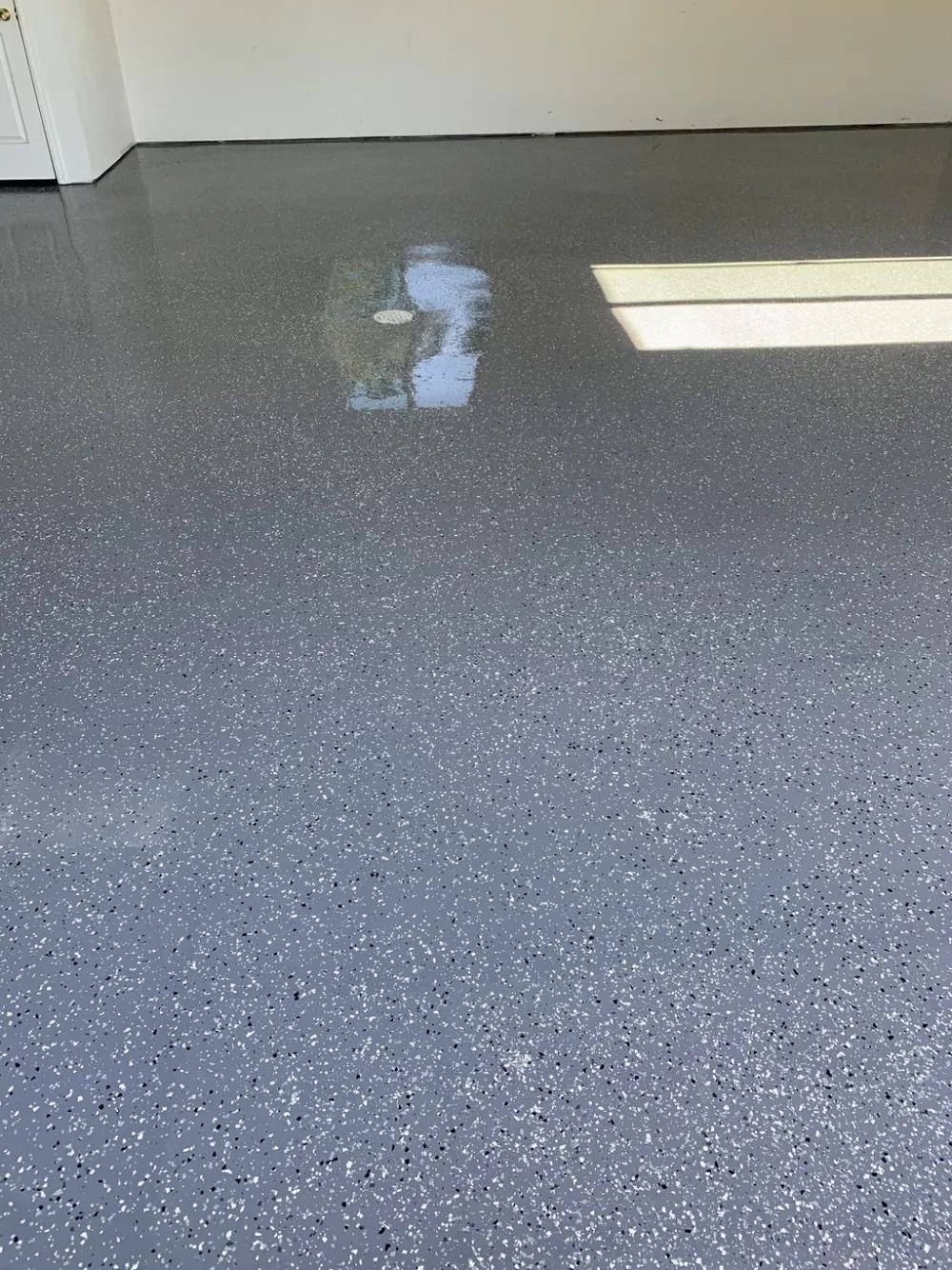
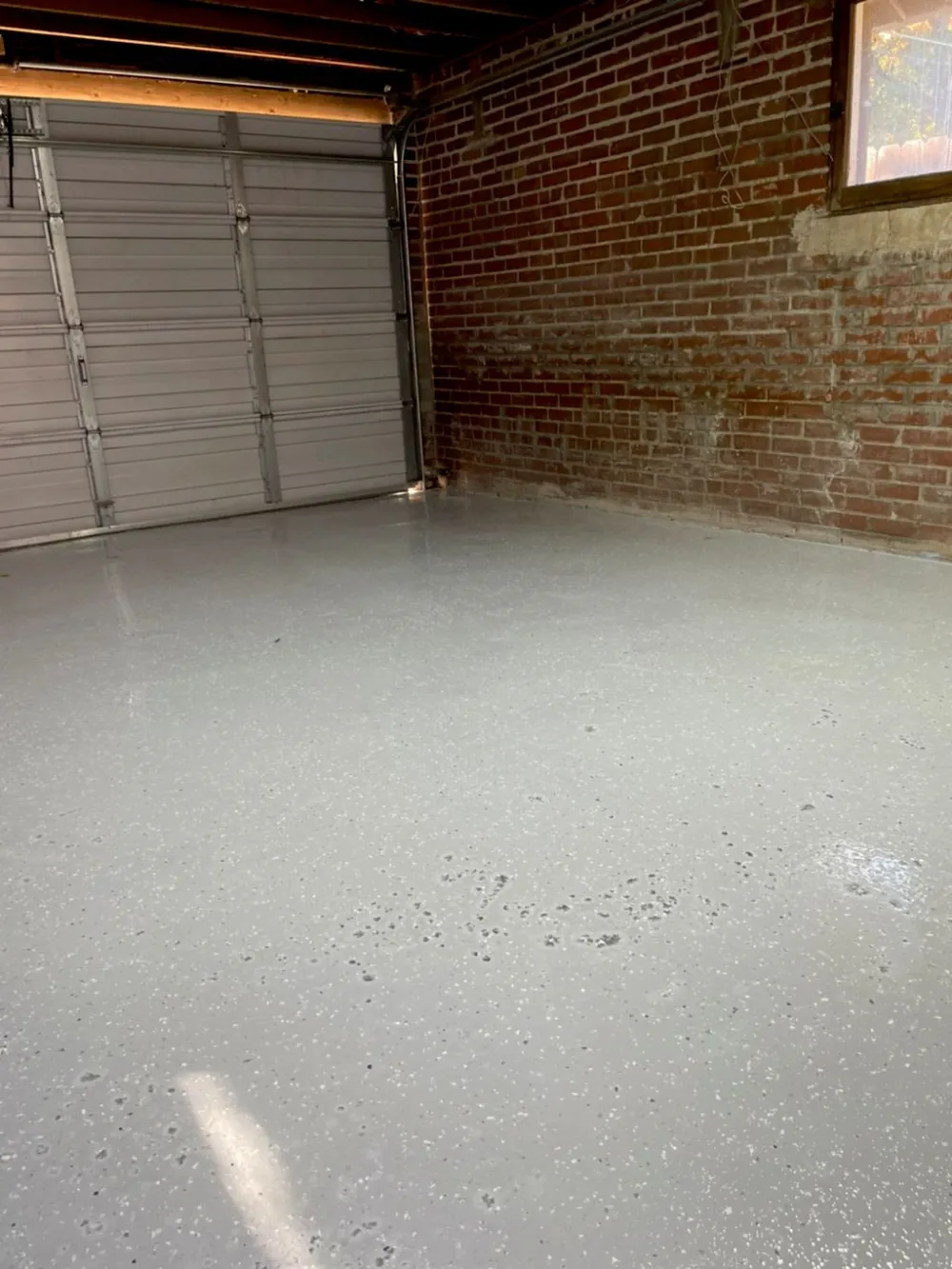
A flake floor is vinyl chips broadcast into a wet base coat and then sealed under a clear top coat. It is far and away the most practical finish we install: the flake adds texture so the floor is not slick, it hides dust, tire marks and minor wear the way a solid color never will, and the color blends are chosen to match whatever the room needs to look like.
We install flake systems throughout Denver, Aurora, Lakewood, Arvada and across the metro in garages, basements, shops and commercial areas. When somebody asks what most people get, this is the answer — and it is what we would put in our own garage.
Tell us about your project — we’ll get right back to you.
The difference between a flake floor that looks right and one that looks sparse comes down to how much flake went into it. A full broadcast means flake is thrown until the base coat will not take any more — total coverage, no base color showing through. The excess is scraped and the surface is sealed.
The low-bid version is a partial or confetti broadcast: a light scattering of flake over a colored base. It uses a fraction of the material, it looks speckled rather than solid, and it is a big reason two flake floor quotes can be so far apart. When you are comparing bids, ask which one you are being quoted.
Texture is the practical argument. Snow and slush come off the car and pool on the floor all winter, and a smooth gloss floor in that state is genuinely slippery. The chip profile of a full-broadcast flake floor breaks that up and gives you something underfoot.
The second argument is that it hides things. Grit tracked in from a gravel drive, tire marks, a dropped tool — a flake blend camouflages all of it, where a solid light-colored floor shows every mark. It is the difference between a floor that looks clean and a floor that has to be kept clean.
Flake blends come in a wide range, from tight neutral grays and tans through to high-contrast blacks, blues and multi-color mixes. Bigger chips read bolder and more textured; smaller chips read closer to a stone or terrazzo look.
Practical guidance: mid-tone, multi-color blends hide the most. Very light blends show grit; very dark solid blends show dust. If you want the floor to look good with the least effort, land in the middle. We will bring samples so you are choosing off a real chip, not a screen.
Free, no-obligation estimates across Denver and the surrounding metro.
(720) 691-6294From the first walk of the floor to the final one, here is exactly how it goes.
We come out, look at the actual slab and talk about how the space gets used. Cracks, spalling, oil, old coatings and moisture all get assessed here — because that is what decides the system and the price.
You get the price, the prep included, the system going down, and the walk-on and park-on dates in writing. It is free, and the number holds unless the scope changes.
Diamond grinding — never acid etching — then vacuum, chase and fill the cracks, patch the spalls and treat any contamination. This is most of the job and it is why the floor lasts.
Primer, base, flake or pigment, then the clear top coat. We tell you exactly when you can walk on it and when you can park on it, and the job is done when you have walked it with us.
Common questions about flake floors across Denver and the surrounding metro. Don't see yours? Give us a call — we're happy to help.
A ground, patched and sealed garage floor that shrugs off ice melt, hot tires and oil — and wipes clean with a shop broom.
Learn More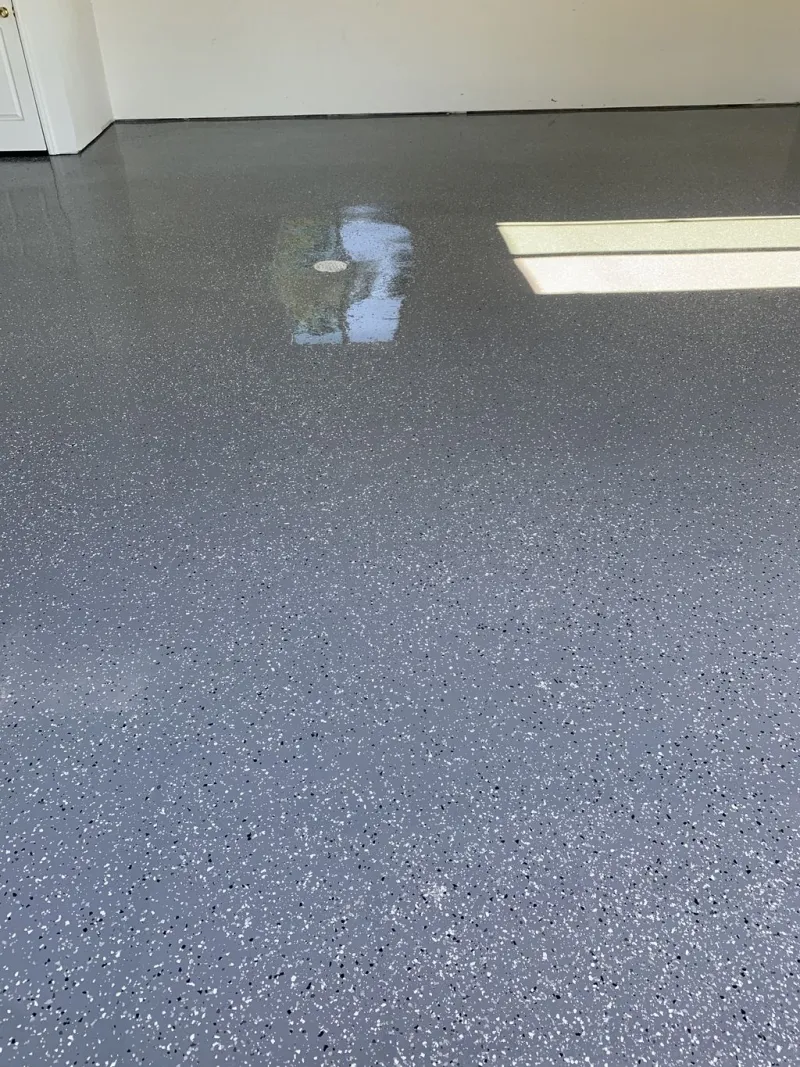
A UV-stable coating that cures in hours instead of days, goes down in cold weather, and does not amber in the sun like epoxy.
Learn More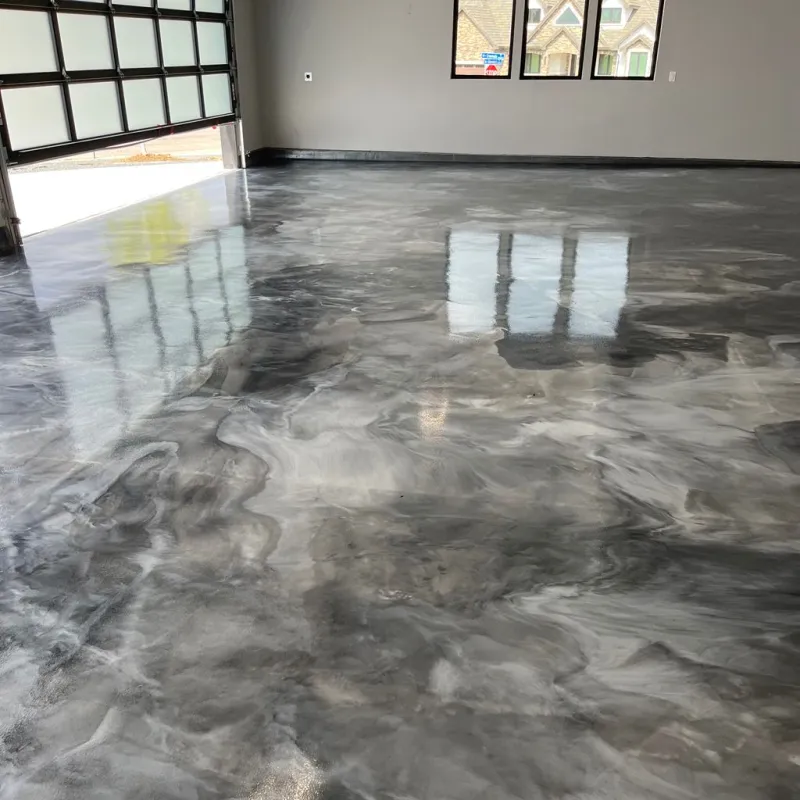
Hard-wearing epoxy systems for garages, basements, shops and commercial spaces — installed over properly ground and repaired concrete.
Learn More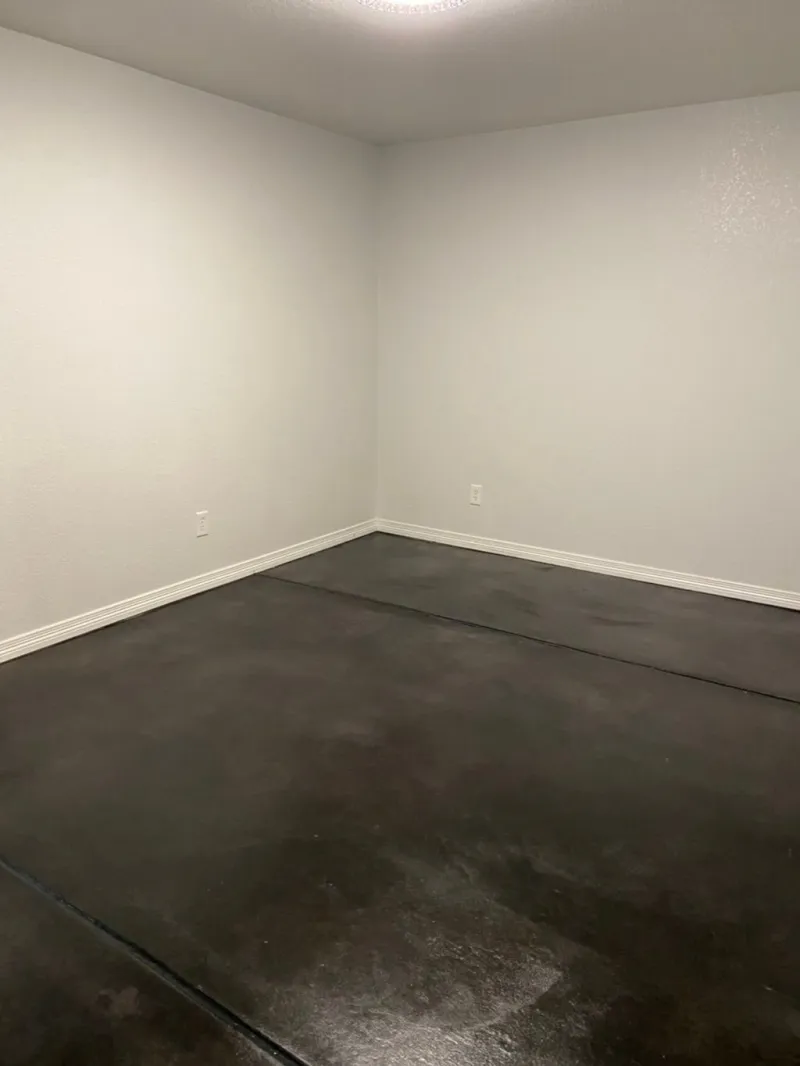
A sealed, warm-looking basement floor that stops concrete dust, cleans easily and does not turn into a problem when water shows up.
Learn More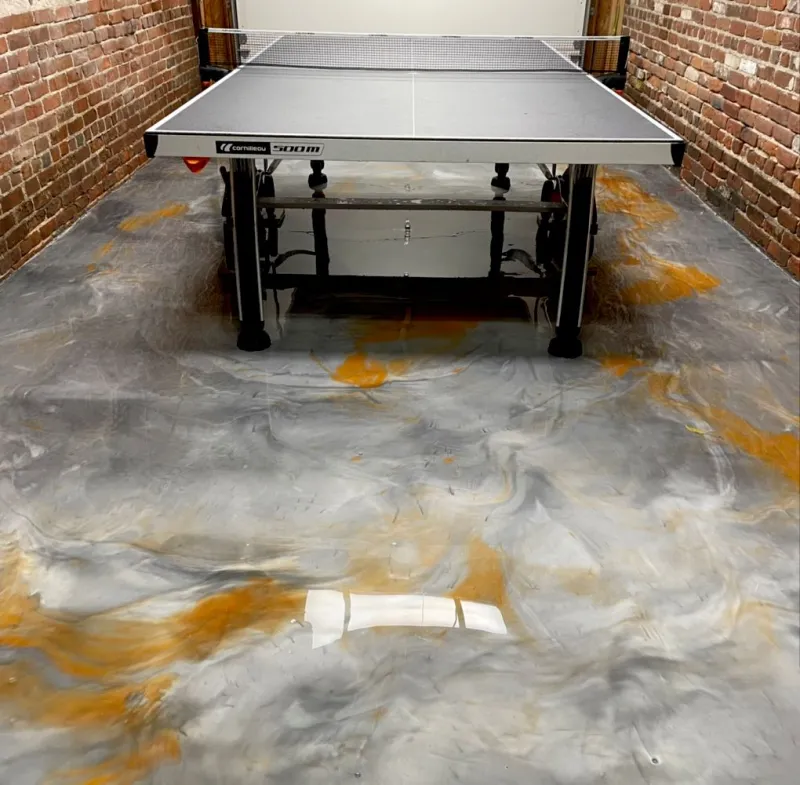
Marbled metallic finishes with real depth — poured, worked by hand and sealed. The floor people actually comment on.
Learn More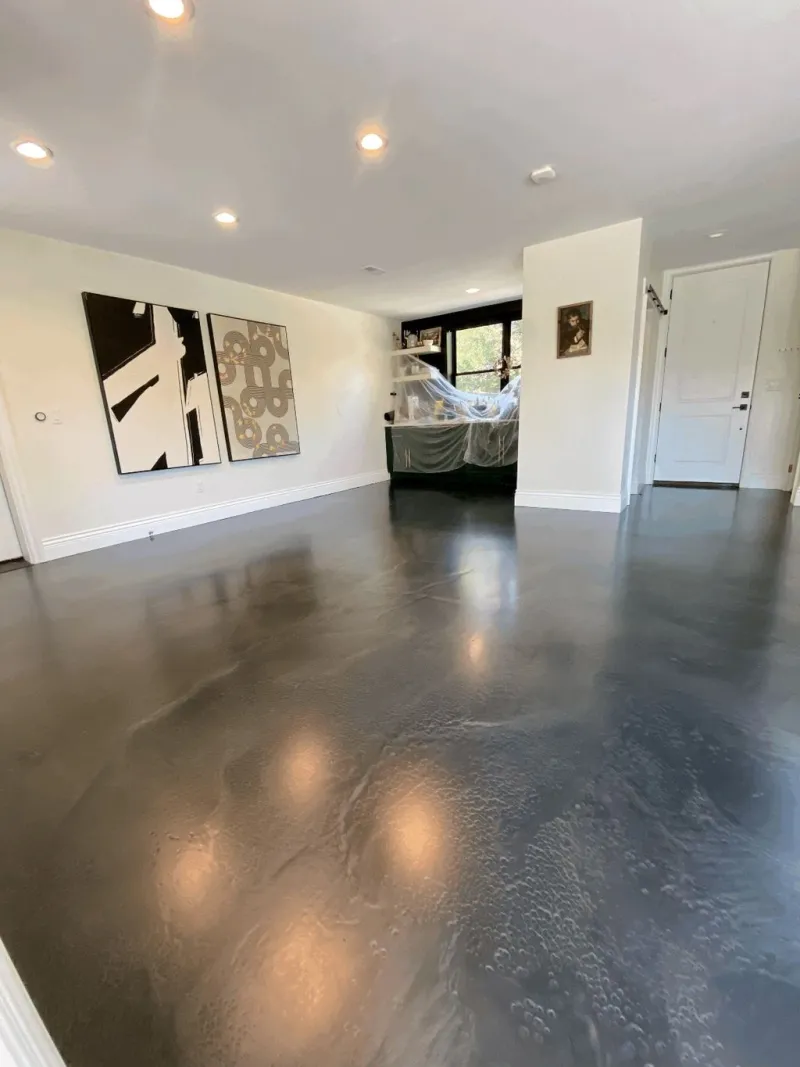
Acid or dye stain worked into ground concrete, then polished and sealed — mottled, natural depth instead of a painted-on look.
Learn More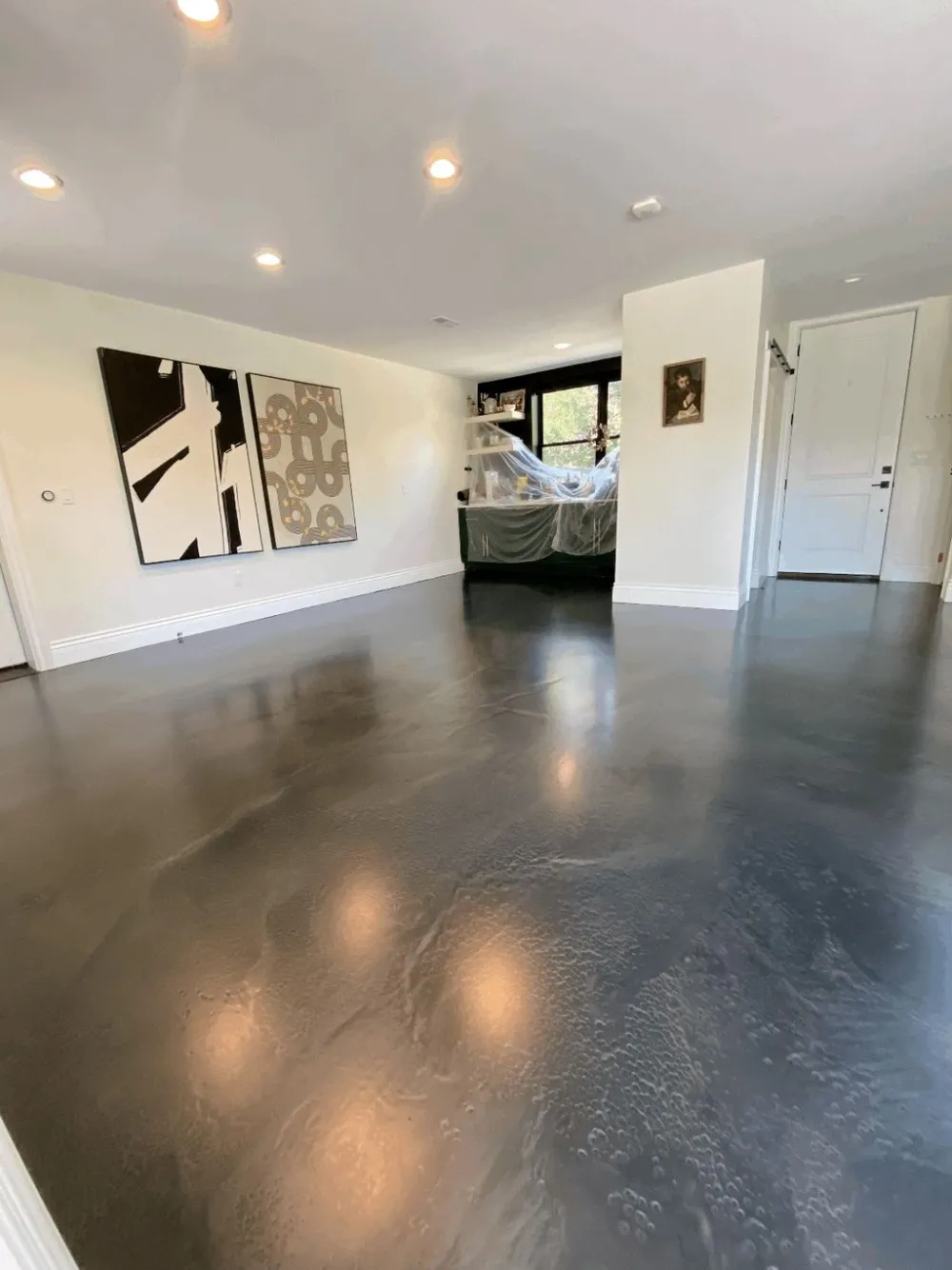
Finishing a Denver basement? Compare coated concrete, stained concrete and carpet on water risk, dust, gyms and cost — plus the moisture test that comes first.
Read more →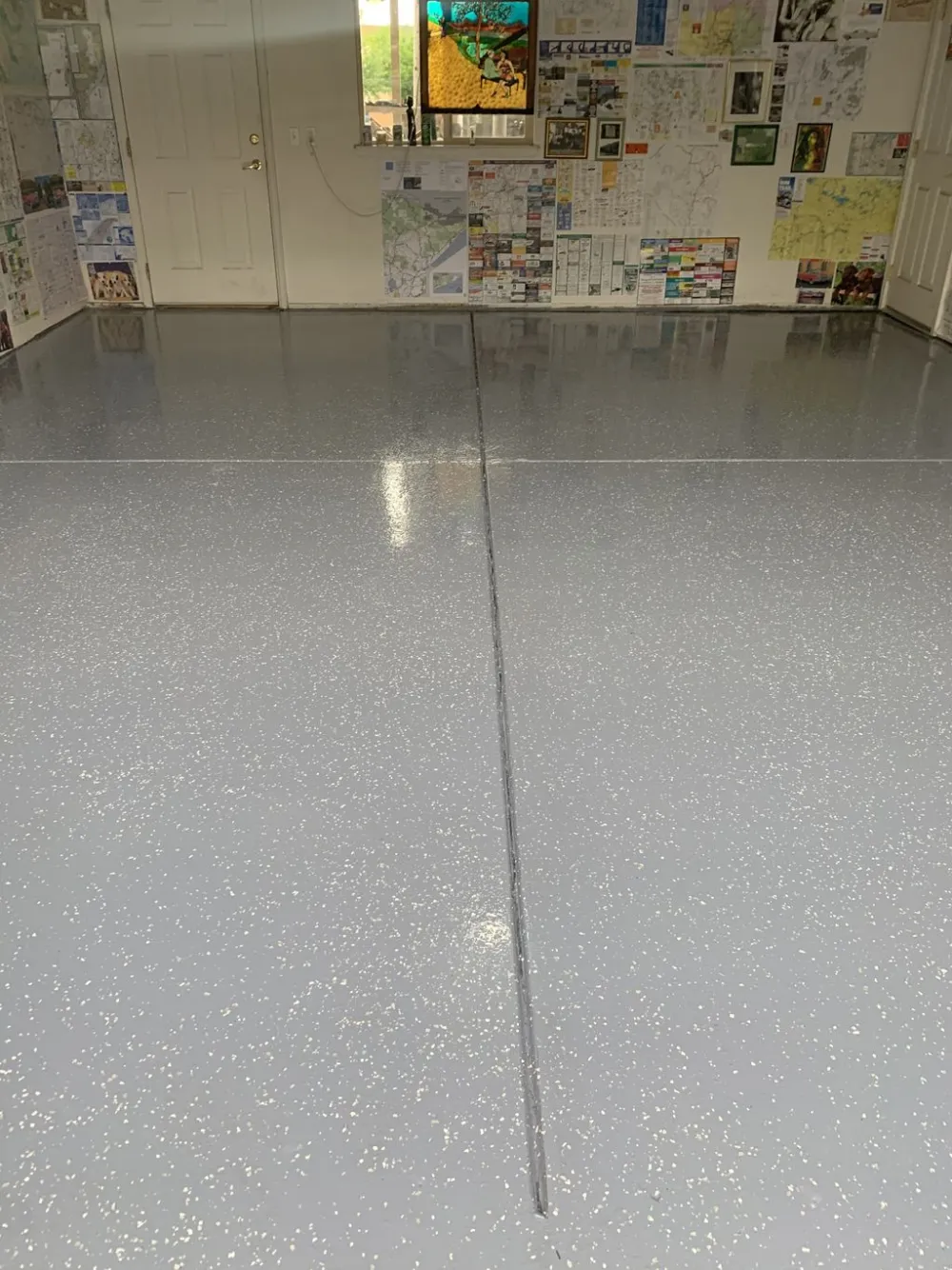
What actually drives the price of a garage floor coating in Denver — square footage, slab condition, and the system — plus why two quotes can be so far apart.
Read more →Ice melt, freeze-thaw and hot tires are what break garage floors in Denver. Here is what each one actually does to concrete and how a coating is specified to survive it.
Read more →Phil has been installing industrial flooring since 1992, and Denver Custom Coatings has 18 years behind it. The person who quotes your floor is the person who grinds and coats it.
Diamond grinding opens the concrete so the primer keys into the slab. Acid etching is faster and cheaper, and it is why most failed floors failed. Prep is where the job is won.
We walk the floor, price it in writing, and flag honest problems — moisture, contamination, a slab that needs real repair — before you commit. The number holds unless the scope changes.
Freeze-thaw, magnesium chloride off the highway and hot tires at altitude are hard on a slab. We specify systems that handle all three, including polyaspartic when the garage runs cold.
Bare garage slab, a basement you are finishing, a peeling floor that needs redoing, or a shop floor that has taken all it can? Call or send the form and we will walk the floor with you and hand you a free written quote.
Tell us about your project — we’ll get right back to you.